
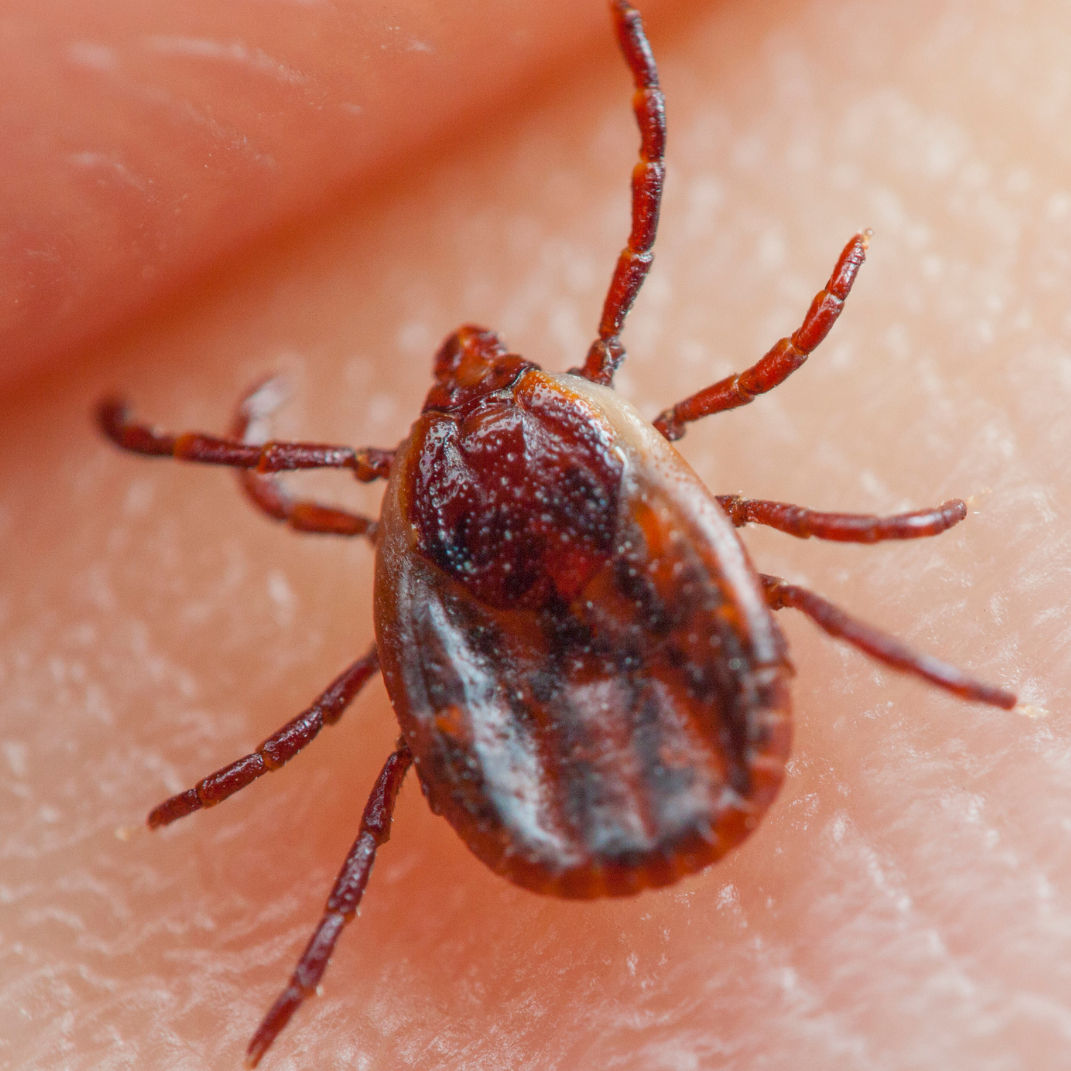
The brown dog tick is a globally distributed tick species that primarily infests dogs but can also bite humans. It belongs to the family Ixodidae (hard ticks) and is characterized by its adaptability to warm and dry climates. Unlike other tick species, it can also reproduce indoors, making it a particularly persistent pest. The brown dog tick (Rhipicephalus sanguineus) is known to transmit Mediterranean spotted fever (Rickettsia conorii) to humans. The risk of infection is particularly high in warm regions and through close contact with infected dogs.
Brown dog tick (Rhipicephalus sanguineus)
- Kingdom: Animals (Animalia)
- Phylum: Arthropods (Arthropoda)
- Class: Arachnida (Arachnids)
- Order: Ticks (Ixodida)
- Family: Hard ticks (Ixodidae)
- Genus: (Rhipicephalus)
- Species: Brown dog tick (Rhipicephalus sanguineus)
Size:
- Head-body length: ~3 - 5mm, fully saturated up to 12mm
Look:
- Legs: Since ticks belong to the arachnids, they have eight legs.
- Color: Brown, elongated-oval body
Life cycle:
- Reproduction: After mating on the host, the fertilized female leaves it to lay eggs in a protected place.
- Development: After about two to five weeks, the larvae hatch and seek a host for their first blood meal. After molting, they develop into nymphs, which feed on blood again before developing into adult ticks. Adult females require another blood meal to lay their eggs. The entire cycle can be completed in two to three months, although the tick can survive for months without feeding.
- Egg laying: Between 1000 and 4000 eggs
- Lifespan: 2 - 24 months
Habitat:
- It lives primarily on its host , usually dogs, but can also infest humans. It prefers areas with thin skin, such as the ears, neck, and between the toes.
- Outside its host, it is found primarily in dry, warm environments , including dog kennels, animal shelters, homes, and stables. Indoors, it hides in cracks, carpets, and furniture, while outdoors it can be found in crevices, under stones, or in leaf litter.
Nutrition:
- It feeds exclusively on blood and requires several blood meals for its development from larva to adult tick.
- Brown dog ticks can survive for up to 18 months without feeding.
Behave:
- Mobility: The brown dog tick is very mobile and can actively search for a host, instead of just passively waiting for one.
Stitches:
- The brown dog tick uses its mouthparts to penetrate the skin and draw blood from its victim.
- It takes several days to collect blood.
- Disease transmission
Disease transmission:
- The brown dog tick (Rhipicephalus sanguineus) can transmit Mediterranean spotted fever (Rickettsia conorii), tick-borne encephalitis (TBE), and Lyme disease to humans. These diseases can cause flu-like symptoms, skin rashes, joint inflammation, or, in severe cases, neurological damage. Prompt removal of the tick and monitoring of the bite site are important for early detection of potential infections.
Travel:
- When traveling to southern regions with dogs, it is essential that the dogs wear protective gear. This can be achieved with medication or collars.
Imports:
- A veterinary examination should be carried out when importing a pet.
Behave:
- If an infestation is detected, consult a pest control professional and/or veterinarian immediately.
Stay calm
- Remove the tick as quickly as possible, but carefully to avoid mistakes.
Remove ticks properly
- Use tick tweezers, a tick card, or pointed tweezers.
- Position the tool as close to the skin as possible and grasp the tick by the head or directly by the mouthparts, not by the abdomen.
- Pull the tick out slowly and straight on, without twisting or squeezing it, to avoid tearing off the head.
Disinfect the puncture site
- Disinfect the area after removal with alcohol, iodine or a suitable disinfectant.
Dispose of the tick safely
- Do not crush the tick with your fingers!
- Dispose of them by submerging them in alcohol, soapy water, or a tightly sealed plastic bag. Alternatively, they can be burned.
Observe the puncture site
- Watch for redness, swelling, or flu-like symptoms over the next few days to weeks.
- If a ring-shaped redness or other symptoms develop, consult a doctor immediately.