
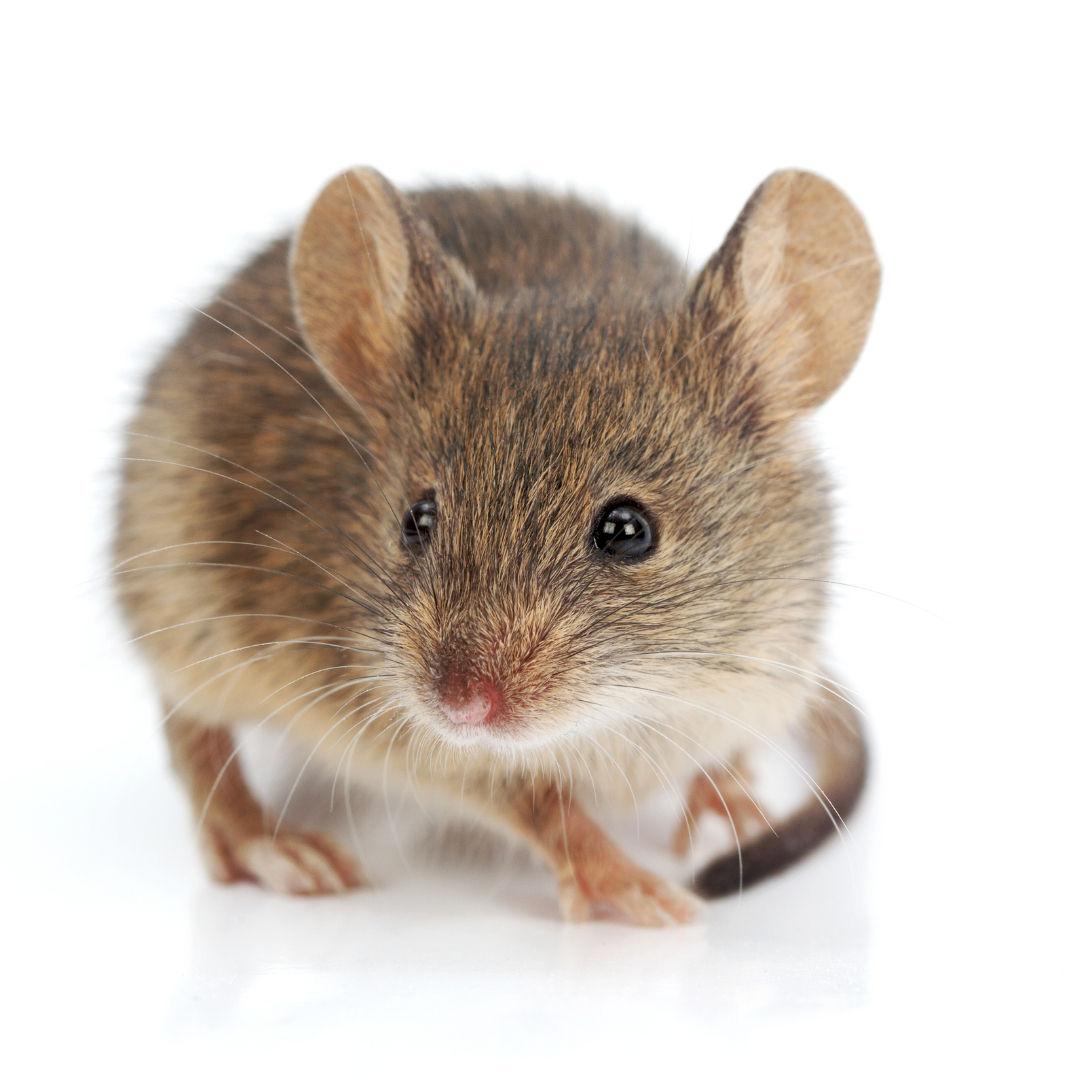
The house mouse is a small, greyish-brown rodent that lives in close proximity to humans worldwide. It is characterized by its small size, long tail, and high adaptability. It is primarily found in residential buildings, storage rooms, and barns.
House mouse (Mus musculus)
- Kingdom: Animals (Animalia)
- Phylum: Chordates (Chordata)
- Class: Mammals (Mammalia)
- Order: Rodents (Rodentia)
- Family: Mouse-like (Muridae)
- Genus: Rat (Rattus)
- Species: House mouse (Mus musculus)
Size:
- Head-body length: 7 – 10 cm (same length as tail)
- Tail length: 7 - 10 cm (same length as body)
- Weight: 15 - 30 g
Look:
- Fur color: Grey-brown fur
- Tail: Thin and the same length as the body
- Ears: Large and bald ears
- Snout: Pointed
Life cycle:
- Reproduction: Possible from an age of ~30 days, all year round
- Gestation period: ~21 days
- Litter size: 5 - 6 boys
- Lifespan: ~3 months
Habitat:
- The house mouse requires only a small territory with a variety of food sources. Due to its small size and inquisitive nature, the house mouse is very active. It will even emerge when people are nearby. It readily uses crevices, shelves, or racks as hiding places. Droppings can be found throughout its activity area.
Nutrition:
- Omnivores: Eat all kinds of food, preferring plant-based foods and sweet foods.
- Fluids: The house mouse does not need to ingest fluids; it can obtain enough through its food.
Behave:
- Social: Lives in family groups
- Curiosity: The house mouse is extremely curious.
- Pest characteristics: Contaminates foodstuffs through feces, urine, and hair. Causes damage by gnawing on electrical cables, wood, and other materials.
Driven:
- Damage: Can cause significant damage by gnawing on buildings, electrical cables, and supplies.
Disease transmission:
- Carriers of pathogens such as cholera, hantavirus, leptospirosis, plague bacteria, dysentery, salmonella and trichinosis
Food:
- Store food and drinks safely and check storage rooms regularly.
- Dispose of food scraps and waste in sealable containers.
Hygiene:
- Do not leave open garbage cans or bags.
- Regular cleaning of surfaces and rooms
House and garden:
- Seal cracks, crevices and possible access points (>6mm) on houses.
- Consult a pest control expert for comprehensive advice.
Behave:
- Use traps and baits only in consultation with pest control professionals. Do not handle the animals directly without protective measures.
Garden maintenance:
- Regularly collect fallen fruit in the garden.
- Store compost heaps far away from the building